We have completed another successful repayment on Indemo, continuing our track record of real estate-backed recoveries.
This marks the 24th Debt Repayment in Indemo’s debt portfolio, reinforcing the reliability of our Discounted Debt model and the performance it continues to deliver to our investor community.
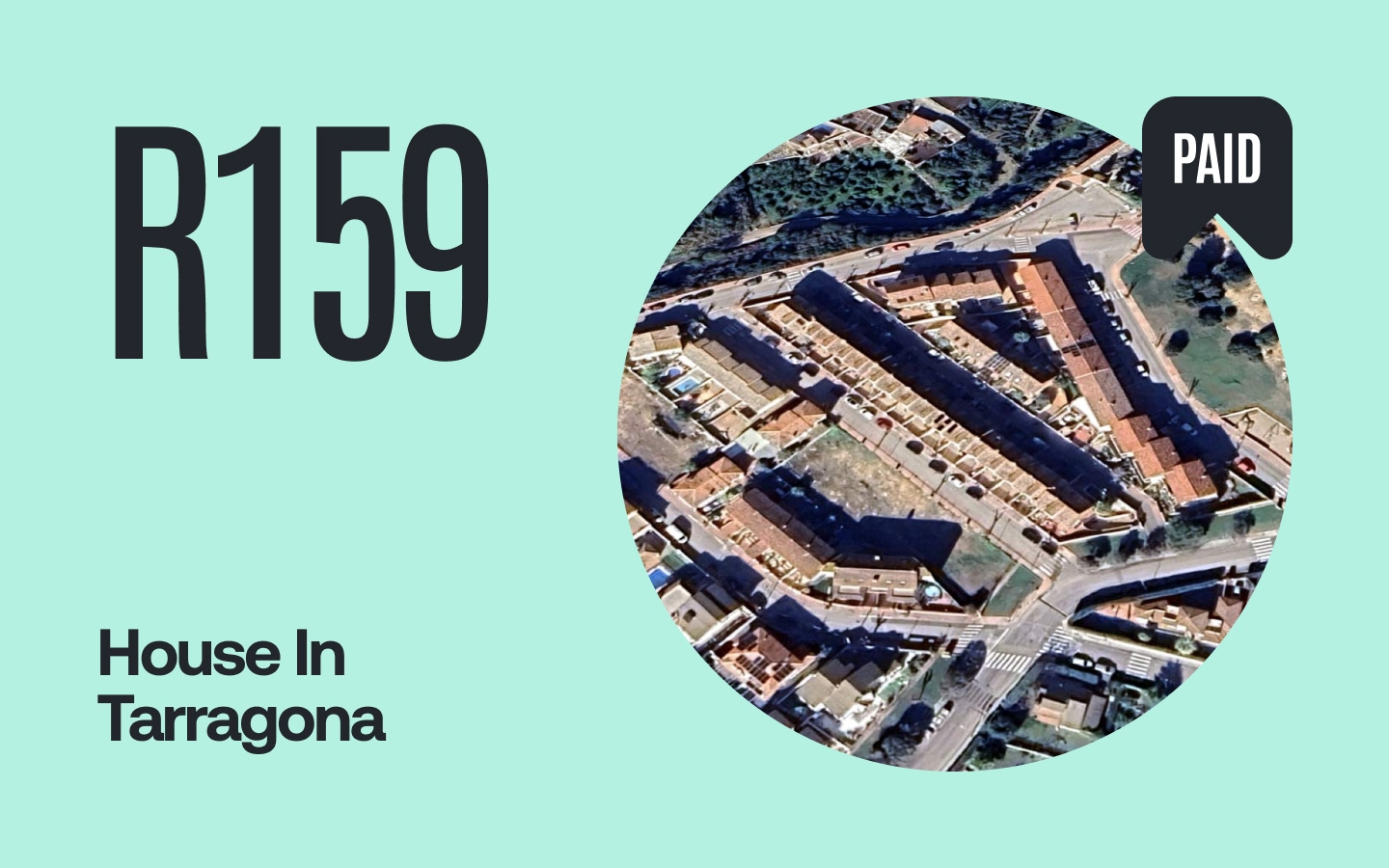
This time, €114,672 in principal and interest was repaid to investors from R159: House in Tarragona. This repayment affected the portfolios of 932 investors, representing 1.1% of all active Notes on the platform.
The annual average weighted ROI for this repayment reached 13.78% per annum, with individual annual returns ranging from 12% to 22% per annum, depending on when each investment was made.
Spotlight on the repaid debt: R159 House in Tarragona
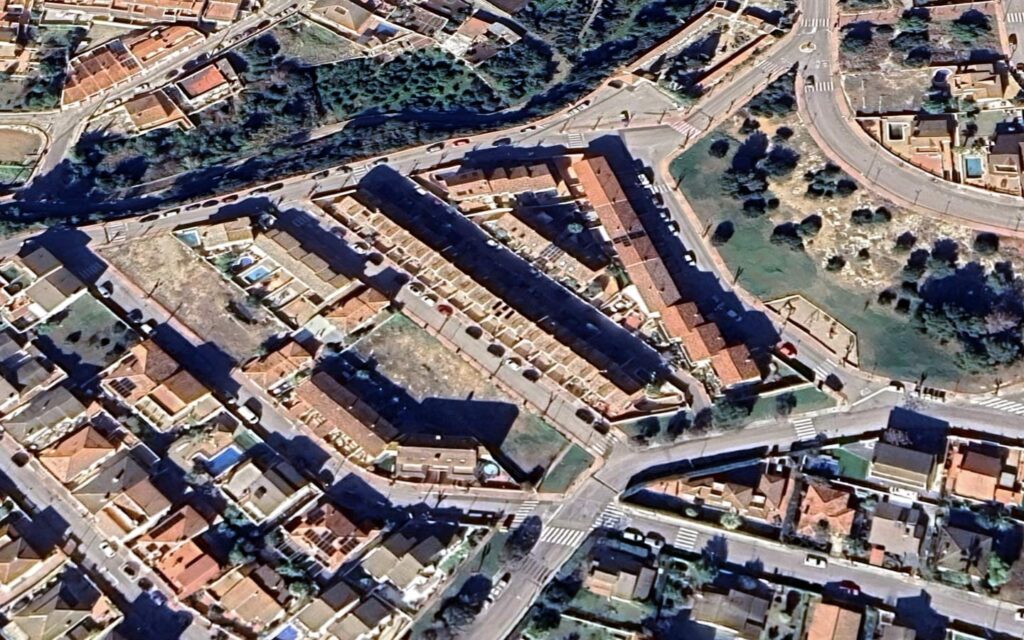
At Indemo, every Discounted Debt investment is secured by real residential property in Spain. R159 was backed by a house in Roda de Barà, Tarragona, providing tangible collateral behind the recovery strategy.
The property is located in a well-established residential area with access to essential local infrastructure and services.
Property and pricing snapshot at listing
- Property type: House
- Location: Roda de Barà, Tarragona
- Size: 122 m²
- Year constructed: 2006
- Total debt: €237,613
- Appraisal value: €172,202
- Investment price: €105,000
- PTD (Price to Debt): 44.2%
- PTV (Price to Value): 61.0%
R159 was first listed on 28 October 2025 at Step 6, Opposition Filing, and reached repayment at Step 24, Sale of Real Estate.
Key figures
Repayment details
- Repayment date: 3 August 2026
- Repayment amount: €114,672 (Principal + Interest)
- Annual average weighted ROI: 13.78% p.a.
- Annual return range: 12.07% to 22.01% p.a.
Investor impact
- Investors affected: 932
- Percentage of all active Notes affected: 1.1%
Flow and exit
- Flow stage at listing: Step 6, Opposition Filing
- Flow stage at repayment: Step 24, Sale of Real Estate
- Exit scenario: Out-of-court property takeover, renovation and market sale
Recovery story: from special focus update to repayment
R159 was previously featured in our Fast-tracked Opportunity: R159 update, where we highlighted a significant change in the recovery path. At that point, the case had moved beyond the standard legal sequence after the servicing company reached an out-of-court settlement with the debtor.
This agreement allowed the servicing company to take over the pledged property without the need to complete the full legal foreclosure process. As a result, the case advanced directly toward the final recovery phase, moving to Step 24, Sale of Real Estate.
This was an important milestone because it showed how alternative recovery flows can accelerate a case when the servicing company identifies a more efficient route than continuing through every step of the court process.
Active asset management after takeover
After the property was taken into possession in February 2026, the servicing company began the standard post-possession asset management process.
Usually, once a property is taken into possession, the servicing company first assesses its physical condition and marketability. Based on that assessment, the team decides what type of works are needed, ranging from a basic clean-up or cosmetic refresh to broader renovation or, in some cases, more structural improvements.
The goal is to prepare the asset for sale in a way that supports the best achievable market price and improves the chances of a successful transaction.
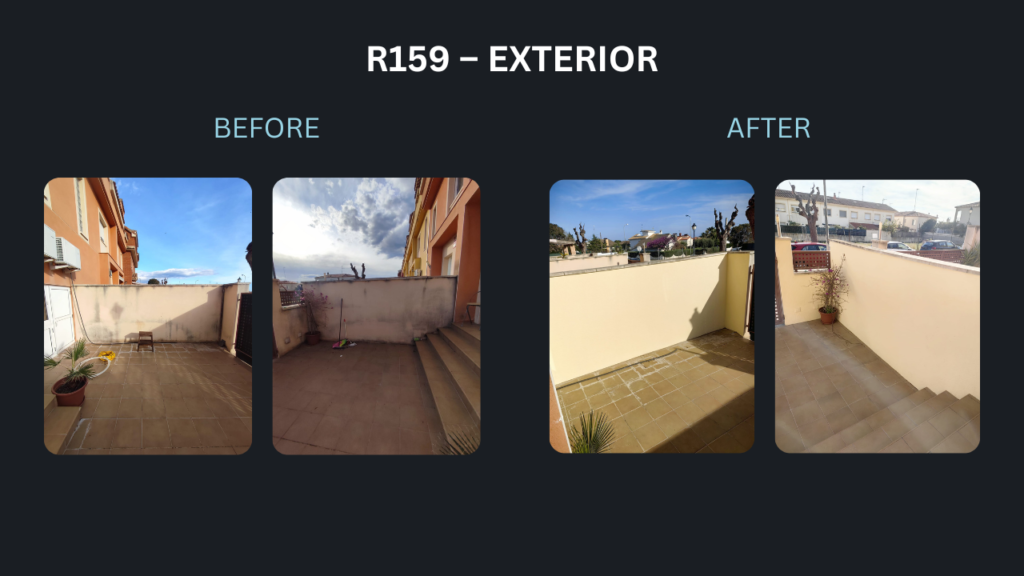
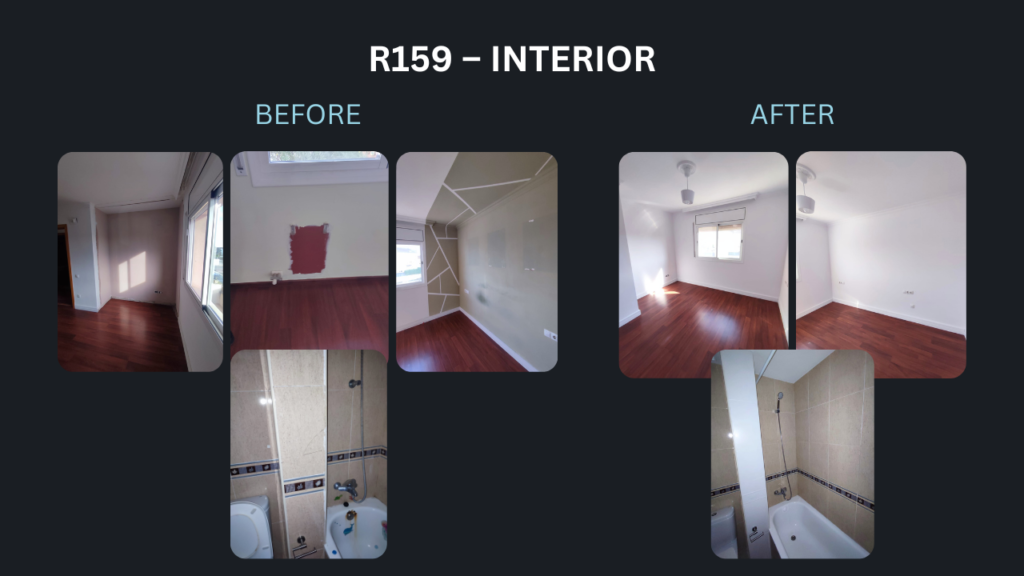
In the case of R159, the property was not simply left on the market. The servicing company actively worked on the asset, including renovation and improvement works aimed at increasing its market appeal and sale value.
These works were financed entirely from the servicing company’s own funds, meaning the servicing company assumed both the investment cost and the execution risk. The objective was to improve the property’s marketability, reduce time on the market, and maximize recovery value.
To make this process more visible, we are also including before-and-after photos of the property in this update. These images help show the practical work that took place after takeover, and how active asset management can improve the condition and market appeal of the underlying real estate before sale.
This case is also a useful example of the type of real estate value creation behind Indemo’s new upcoming Fix and Flip investment product, recently announced by Indemo CEO Sergejs Viskovskis in the Q2 2026 review. While R159 was originally part of the Discounted Debt portfolio, the case clearly demonstrates the logic behind fix-and-flip strategies: identifying an asset with improvement potential, investing in its condition, and aiming to create value through a faster and more attractive resale.
In that sense, R159 serves not only as a successful repayment case, but also as a practical preview of how when the legal recovery works are completed, property improvement, professional asset management, and disciplined exit planning can work together in future Indemo investment products.
Sale process and final steps
On the commercial side, active sale efforts were launched after the takeover. A buyer was identified, and a reservation agreement was signed.
There were also several procedural steps required before the sale could be finalized. In Catalonia, the municipality may have a statutory right of first refusal in certain property transactions. For R159, the municipality’s waiver of this right was requested and received in May 2026.
The transaction also required the removal of the registry note connected with the foreclosure process. After the court closed the case on 25 March 2026, the servicing team requested the required court order, which was issued in June 2026 and lodged with the Property Register so the sale could be completed.
Once the final sale was completed, the repayment process on the Indemo platform was initiated.
Recovery scenario
In this case, the servicing company reached an out-of-court settlement with the debtor and took over the pledged property without the need to complete the full legal foreclosure process.
Following the takeover, the servicing company financed a cosmetic renovation entirely from its own funds, assuming both the investment cost and the execution risk. The objective was to improve the property's market appeal, facilitate a faster sale, and maximize the recovery value. As a result, the property was sold at a premium to its original market valuation.
Before calculating the final recovery proceeds, the following costs were deducted from the sale price:
- the renovation costs initially financed by the servicing company;
- applicable taxes and state fees;
- costs related to the re-registration and documentation of both the property takeover and its subsequent sale; and
- the sales broker's commission.
This proactive exit strategy enabled the servicing company to close the case significantly faster than would have been possible through the full legal enforcement process. It accelerated the turnover of Indemo investors’ capital while improving the property’s attractiveness and reducing its time on the market.
The case also reflects Indemo’s socially responsible recovery principles. As part of the settlement, the original debtor was released from the excessive portion of the debt, which was significantly higher than the value of the mortgaged real estate. This allowed the debtor to resolve an unsustainable financial situation and start rebuilding their credit history from a clean slate.
At the same time, the case demonstrates how active asset management can create additional value. By investing its own capital to enhance the collateral, the servicing company improved the marketability and sale potential of the asset, ultimately benefiting both investors and the overall efficiency of the recovery process.
See how this repayment ranks
You can also see how this repayment compares with previous Indemo repayments in the Insights section of the Indemo website.
The Insights page brings together key platform figures and repayment data, helping investors follow Indemo’s repayment history, compare completed recoveries, and better understand how individual cases contribute to the overall track record.
Clearer Cashback Reporting
In Q2, we also improved how cashback transactions are allocated and displayed in investors’ statements and portfolio reporting.
With the updated logic, cashback is now linked more clearly to the investment transactions that generated it. This gives investors a more detailed view of how cashback was calculated, which investments generated it, and how it contributes to the overall return.
The update also improves the Portfolio > Assets > Sold section. For repaid investments, investors can now see the Actual Return together with a clearer breakdown of the investment return and any cashback already paid in relation to that investment.
This does not change the cashback amount owed to investors. It only improves how cashback is displayed, making reporting clearer, more transparent, and easier to follow.
Read more here: https://indemo.eu/blog/indemo-improves-cashback-reporting-for-greater-transparency
A Note on Returns
As with all Indemo Discounted Debt investments, actual returns depend on when you entered the investment, determined by the issue date of your Note.
To check your individual ROI from this repayment, head over to the Portfolio section of your Indemo account. For broader insights, check out the Analytics dashboard.
More opportunities are already live on the platform, so your money can keep working for you.
Check out Indemo’s Key Socials:
📢 Telegram - Exclusive Indemo Community Chat featuring key Indemo stakeholders
📷 Instagram- Weekly content, Meet the Team, Weekly Stories
🎥 YouTube - Podcasts, expert insights, quarterly reviews, and giveaways
This content is a marketing communication. It shall not be treated as investment advice, independent research or offer, recommendation or invitation to invest in the investment opportunities referred to herein. The content is not aimed at promoting services or products to persons based in jurisdictions where the distribution of said information would be illegal.
Investing in financial instruments involves risk, and there’s no guarantee that investors will get back invested capital. Moreover, past performance does not guarantee future returns. Indemo SIA shall not be responsible for any direct or indirect loss from using the provided information.